
Rural innovation becomes more valuable when knowledge can move beyond the place where it was first developed. A pilot, tool or methodology may begin in one region, but its lessons can help other communities only when they are shared, discussed and adapted to new contexts. This is where STORCITO partner collaboration plays an important role.
STORCITO brings together organisations with complementary expertise in rural development, mobility, digital technologies, energy and environmental challenges. Although partners contribute to specific work packages and case studies, the project also creates opportunities for them to support one another in bringing results to new audiences. A recent example from Germany shows how this can work in practice.
STORCITO partner collaboration at Mobilität der Zukunft 2026
On 24 September 2026, the Mobilität der Zukunft 2026 symposium took place at the Plattling Campus of Technische Hochschule Deggendorf (THD), bringing together representatives from research, industry and the public sector to exchange ideas on the future of mobility. The 2026 edition attracted around 140 visitors and presented technologies and concepts linked to modern and autonomous mobility.
STORCITO was represented through a poster presentation on the project’s third case study, focused on inclusive and climate-neutral rural mobility. Andreas Weber from THD presented the concept, current state and results of the work to the event’s audience in Germany.
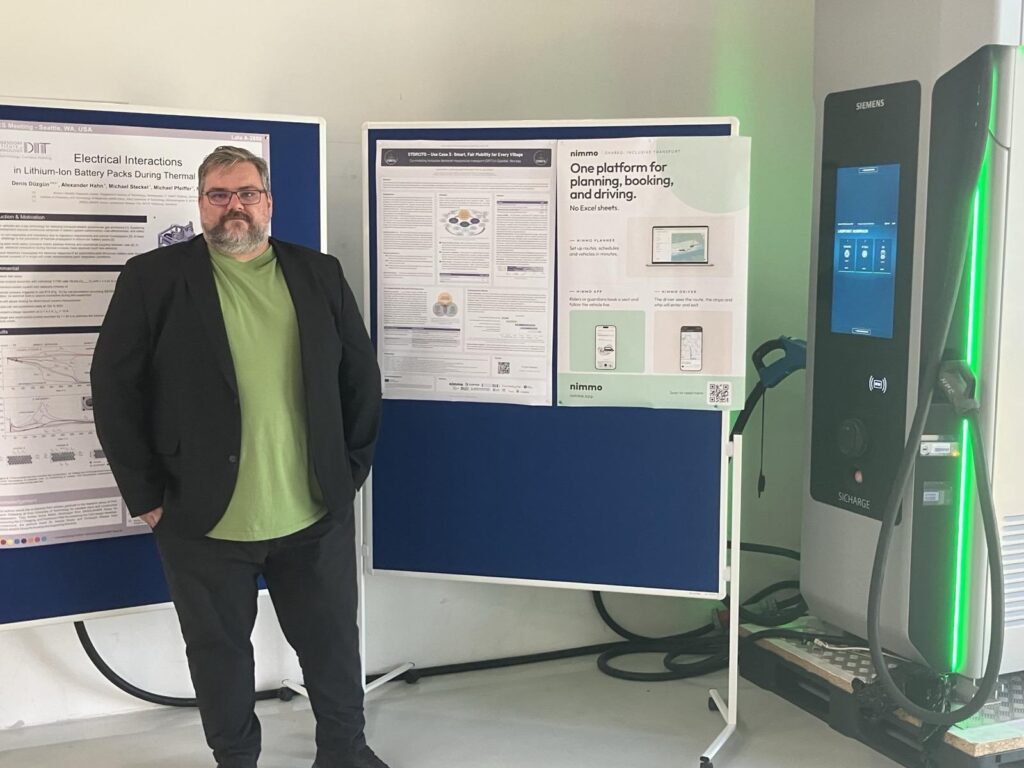
Importantly, the mobility work presented was originally developed by SINTEF and NIMMO. Andreas is not directly responsible for Case Study 3. Instead, he helped create the opportunity for the work to be presented, supported the preparation of the poster and delivered the presentation himself. His local knowledge and ability to communicate in German and Bavarian helped bring the project’s work closer to a new regional audience.
This is a practical example of STORCITO partner collaboration: expertise and results produced by one group of partners can be supported by another partner when an appropriate dissemination opportunity emerges.
From Gjesdal to a new rural audience in Bavaria
The work presented in Plattling is rooted in STORCITO’s Case Study 3: Smart, Fair Mobility for Every Village. In Gjesdal, Norway, SINTEF, NIMMO and Gjesdal Municipality are working together to explore mobility solutions that respond to the needs of rural residents, including children, young people, older residents and other groups who may face limited transport options.
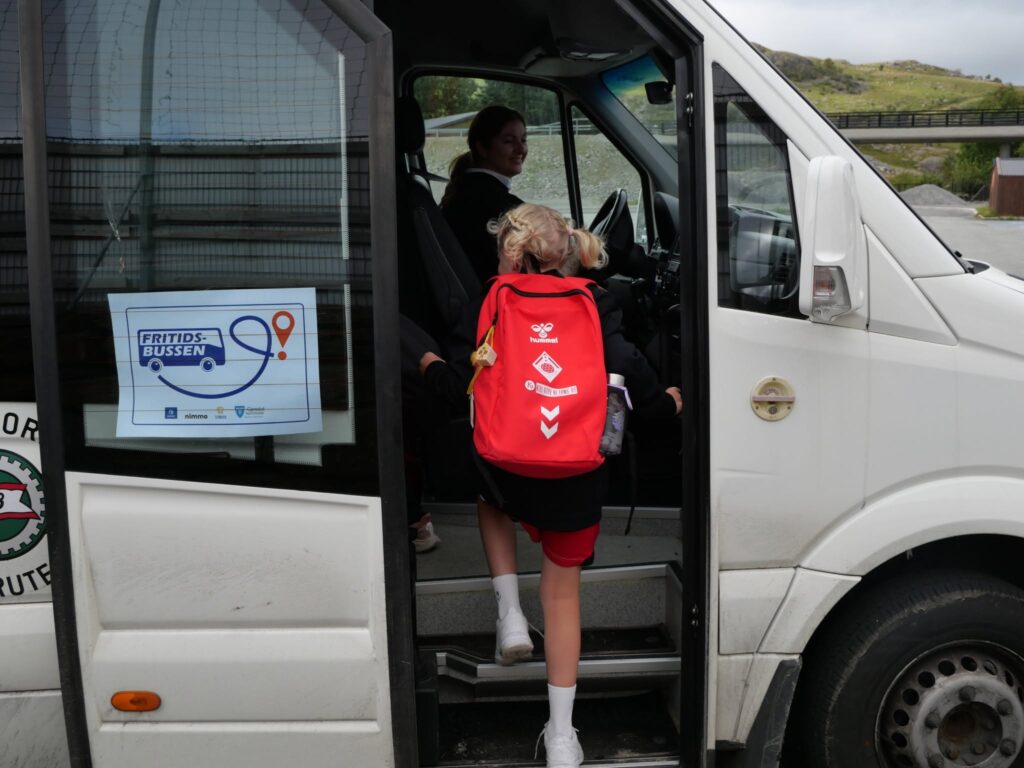
Within this case study, SINTEF leads the work on climate-neutral and inclusive rural mobility, while NIMMO contributes its on-demand mobility technology and Gjesdal Municipality provides the geographical and administrative environment for testing the solutions.
The project has also documented the testing of the Fritidsbussen, or Leisure Bus, as part of this wider effort to improve access to leisure and community activities. More about this work can be found in the STORCITO article When Transport Becomes Participation: Testing Inclusive Mobility in Gjesdal.
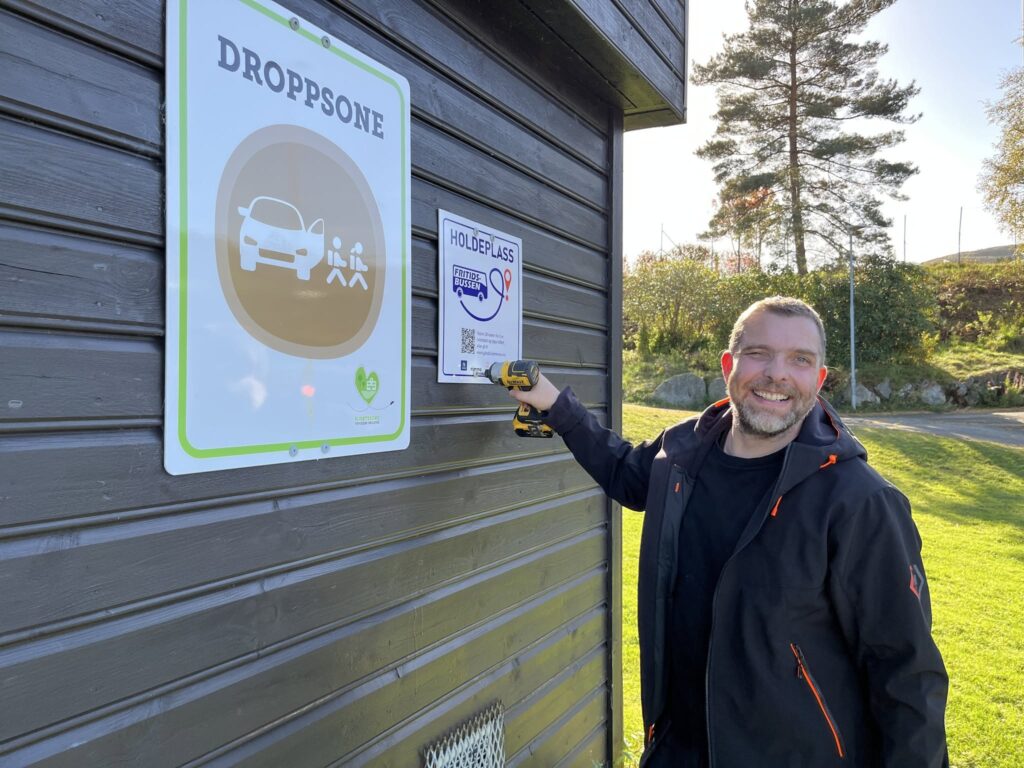
Therefore, when THD brought this work to Mobilität der Zukunft 2026, the presentation did more than communicate an isolated project activity. It connected experience from a Norwegian rural context with stakeholders attending a mobility event in Bavaria. In this way, STORCITO partner collaboration can help results reach people who may otherwise not encounter the work through the original pilot.
Why STORCITO partner collaboration matters for transferability
Transferability is not simply a matter of taking a solution developed in one place and reproducing it unchanged somewhere else. Rural areas differ in population density, governance, infrastructure, available services, geography, user expectations and institutional capacity. Consequently, a solution that works in one municipality may require significant adaptation before it can be relevant elsewhere.
For this reason, exposing project results to different professional and territorial audiences is valuable. New audiences can ask different questions, identify constraints that were not visible in the original setting and consider how an approach might fit their own circumstances. Events, workshops and conferences can therefore function as spaces where early transferability is explored through dialogue.
STORCITO partner collaboration supports this process because consortium partners are embedded in different national and regional contexts. They have access to different networks, languages, stakeholder communities and dissemination opportunities. When those connections are used collectively, the project can extend the reach of its results without separating them from the partners who generated the original knowledge.
The Plattling example also shows why clear attribution matters. Cross-partner dissemination does not mean transferring ownership of a result. Instead, it means helping colleagues take validated project knowledge into spaces where it can generate further awareness, discussion and potential interest.
Local solutions, European learning
This approach reflects a broader principle within STORCITO. The project addresses rural challenges through place-based solutions, recognising that communities across Europe do not all face identical circumstances. Its three case studies focus on wildfire prevention, community-energy systems and inclusive climate-neutral mobility, while considering how technical, social and organisational innovations can respond to different rural realities.
At the same time, locally grounded work should not remain isolated. If useful lessons are to contribute to rural transformation at European level, they need pathways to travel. STORCITO partner collaboration provides one of those pathways by connecting the work of technical partners, researchers, companies and local authorities with opportunities arising elsewhere in the consortium.
This can happen in several ways: a partner may identify a relevant event, introduce a result to a regional network, support translation or contextualisation, connect colleagues with new stakeholders, or present work on behalf of the partners who developed it. The exact mechanism may vary, but the underlying objective remains the same: increase the practical reach of project knowledge while preserving its context and authorship.
Building a culture of collaboration beyond individual tasks
The experience at Mobilität der Zukunft 2026 illustrates that communication and dissemination are not only the responsibility of a communication team. Partners across a European project can contribute by recognising where results may be useful and helping them reach the right communities.
Moreover, this type of collaboration can strengthen connections inside the consortium itself. When partners understand what others are developing, they are better placed to identify overlaps, complementary expertise and opportunities for joint action. Communication then becomes part of the project’s knowledge-exchange process rather than simply the final step after a result has been produced.
The STORCITO consortium combines universities, research organisations, technology companies and public authorities from several European countries, each bringing different technical and local expertise to the project.
For STORCITO, this is particularly relevant because the project is working with different rural challenges and contexts. Creating links between those activities can help build a more connected picture of rural innovation, where technological development, stakeholder participation and local implementation inform one another.
Helping STORCITO results travel further
The poster presentation in Plattling is a relatively simple example, but it captures an important idea: a project result can gain new relevance when another partner helps it reach a different place, language or audience.
As STORCITO progresses, continuing this kind of STORCITO partner collaboration can support the wider dissemination and discussion of project findings across Europe. The goal is not to assume that one rural solution will work everywhere. Rather, it is to make knowledge visible, encourage exchange and create opportunities for communities and stakeholders to consider what can be adapted to their own realities.
From Gjesdal to Bavaria, the journey of STORCITO’s rural mobility work shows how cooperation between partners can help local experience become part of a broader European conversation.